Judgment

Judging others comes so very naturally to me, and it’s a part of my ego/psyche that I like the least. I have taken the long journey from Christian religions to Taoism, which is a philosophy that encourages self-truth, similar to Jungian shadow work. Taoism also eschews any religion, though it encourages borrowing from other philosophies as you see fit. I left the American Christian church because it is even more judgy than I am!

My first change of beliefs that I had to expunge from the Christian mindset I had been beleaguered by was to see homosexuality as an anathema to society rather than a part of the spectrum of human sexuality. I knew several gay men and women prior to reaching that position, and one was a coworker willing to field my questions about his relationship with his partner in an honest and raw fashion. Others were dear friends of mine, though I never wanted to see that side of them, so I didn’t.

The next two changes have been very recent. I do care for people who are on the autism spectrum, but those who are profoundly autistic to the point of speechlessness frightened me. I think it’s because my interaction with them was medical, and medical interactions for autistic people are terrifying, and they fight back hard. I heard about the podcast “The Telepathy Tapes” from several people, but I only listened to it a few months ago. If the revelations about telepathic communication amongst non-speakers are true, and I think they are because I trust the researchers involved, then autistic non-speakers have an incredible ability that we need to revere as if they are modern-day oracles.  At the very least, they should be involved in parapsychological and neurological studies involving non-verbal/non-physical communication. 

Just yesterday, I was listening to “The Breakdown”, a YouTube podcast starring Mayim Bialik from “Big Bang Theory,” who also has college degrees in the neurosciences. I recently discovered her podcast when her subject matter and my interest intersected with an interview of Tom Campbell discussing his theory of everything. Yesterday, Mayim and her partner, John, were interviewing Betty Guadagno, who is a life coach for those suffering from addictions. Her story interested me because she claims to have had a near-death experience during a drug overdose. It’s not clear if she was clinically dead and revived, so I will not say that it was definitive. She may have had an amazing hallucination, but it had the earmarks of an NDE. That is splitting hairs, and it isn’t that important to me. She began the interview by discussing the many addictions she suffered from, and that it was a family disorder. She saw all of the dysfunction that addicted parents have and absorbed the low self-esteem from them. She also fell into selling drugs, prostitution, and pimping women to make enough money to be high.  

Frankly, I was disgusted to hear this part of her interview, and I wanted Mayim to move on to the description of the NDE. In my judgy head, I said, “Just another junkie who died and came back.” Well, slap my face, but my lesson came a few minutes later when she spoke about one of the hallmarks noted in afterlife studies: the choices we make prior to coming to this world from the astral plane. 

As an aside, we have free will. We choose our parents and the issues we will deal with on Earth as these thick and plodding human creatures. Then, we forget all about that as we undergo spiritual amnesia and think that God is a very cruel deity to make us suffer so much. We continue with a level of free will, as much as can be in a material matrix, and then, hopefully, we have a spiritual awakening in our latter years. Obviously, this doesn’t happen for many, and they fall in love with their Earthbound existence, or they just cannot stand their lives and commit suicide. No judgment there, I once tried to commit suicide myself when I was a teen. 

Betty, during her NDE/hallucination, was being shown the life experiences she had and how they affected others. She met her father, who became one of her spirit guides. She found out that she had chosen her parents, her addictions, and her prostitution so that her astral self could advance to the next level. Look at it this way: life is an MMORPG, and you are living as an avatar on Earth. You have levels to your existence, and they keep getting harder to accomplish as you progress. Then you become this kick-ass character with all the armor, weapons, magic spells, mana, whatever. But the goal of the game is not to fight the last major boss, but to love. It’s that simple. 

What smashed me in the face was that Betty chose the existence of a drug-addled prostitute and pimp. There are very few more lowly in our society, and we shun them. I had very little compassion for people with addiction, thinking that it’s some kind of character flaw and a lack of self-preservation. It didn’t help that my stepfather was an alcoholic who caused a rift to develop between my mother and me. What an important epiphany to find out that we choose to be the lowest in society, to suffer the greatest humiliations in order to gain the highest levels in our afterlife. Instead of reviling those who suffer on Earth, we should be recognizing them as doing their greatest spiritual work. We should offer love and assistance rather than anger and suspicion. 

The moral of the story is that we will always have spiritual work to be done as long as we’re corporeal. We must realize that judgment is a falsity that we all believe to be true, only so that we can feel superior to someone else. Newsflash: no one is better than you, and no one is worse than you. We are all connected, and judgment prevents connection.

Living in a Virtual Reality

I am thrilled right now. Why? Because I’ve found someone who thinks the way I do about the mechanism of Psi. Let me explain:

Back in the day, I used to play a Massive Multiplayer Online Role-Playing game (MMORPG) called EverQuest (and its sequel, EverQuest II). My handle, “Tantlian,” is what I called my avatar in the game (Tantlian Blessed). The name just came to me; it wasn’t generated. Anyway, I spent enough time on these games that I leveled up to the high 40s.

If you haven’t played on these platforms before, imagine logging into a game where you get to choose your avatar’s attributes. In Everquest, I could be any of a number of fantasy-type characters.  I could be either gender; I could have any eye or hair color. My body type was locked into whether I chose between dwarf, elf, or human, but otherwise, my avatar was unique to me. Once I got that down, I got to decide what my avatar would be good at. I could choose a magic user, a healer, or a fighter. Once these were decided, I could enter the game. Doesn’t this sound an awful lot like how the “other side” and the work done by the UVA Department of Perceptual Studies have said we decide upon our lives before we’re born?

I enter the game as a first-level character. That means I have very few abilities and a very low strength. I am ignorant, and I have very few items in my bag. I’m wearing the most basic of clothing. Fortunately, the game provides a training level for avatars to understand the game’s mechanics and how to do a number of “in-game” activities. I interacted with “Non-player characters” (NPCs) and “Player Characters” (PCs or other human players). I had to click on the NPCs to get a conversation out of them, which had been programmed, or they would attack me, and I would have to defend myself or die. I interacted with PCs through a series of texts. The NPCs could be adversarial or necessary for me to progress through the game. The PCs and I could join together to form a group if we had to tackle a particularly difficult foe. Sometimes, we would gather into a group to enter a dungeon or other location, which seemed like going into a pocket universe. As I progressed, which took longer and required me to achieve difficult tasks for each level, I also attained more “Experience” and “Wisdom” (not to mention very cool mithril armor). 

Now that I’ve described just one of the plethora of MMORPGs in existence, I want to point out some important attributes:

  1. It is a structured environment that has been programmed.
  2. Within this structured environment, I have a certain amount of free will.
  3. I am not in the environment; I function as an avatar.
  4. I progress through a series of difficult events, frequently with others, to advance.
  5. Advancing requires gaining experience.

I have been thinking about the experiences of life on Earth compared to life in a programmed environment, especially since some physicists examining the math suggest that we may be living in a holographic universe or a simulation. Wouldn’t it be interesting if art replicated life through the invention of MMORPGs? Are we potentially mimicking the astral plains of our spiritual existence through innovations like the internet, virtual reality, and fantasy games? 

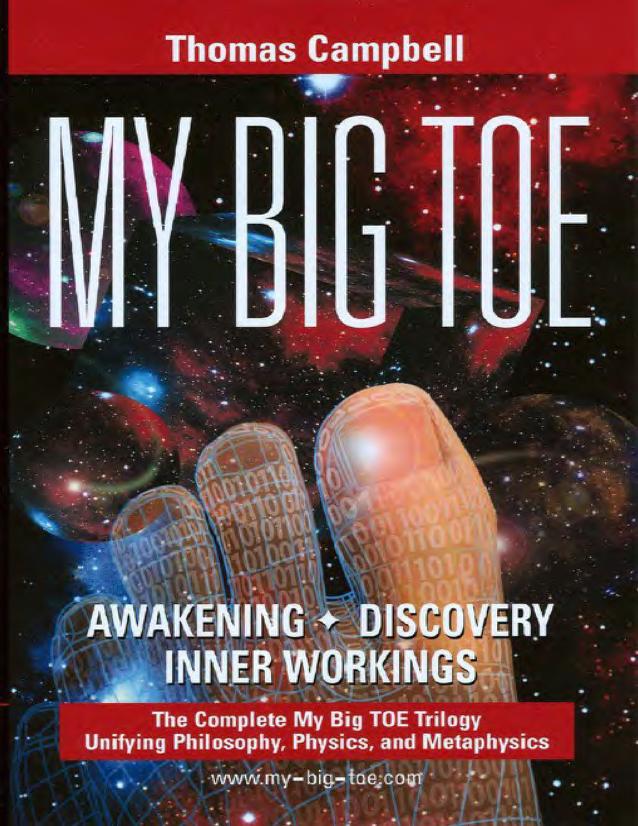
I recently listened to an interview that Jeffrey Mishlove conducted with physicist and psychic healer Tom Campbell, who collaborated with Monroe of the Monroe Institute in Virginia, attempting to explain psychic functioning. Dr. Campbell is also the author of “My Big T.O.E.,” or Theory of Everything. This is a common term used by physicists to describe the combination of the theory of relativity with Newtonian physics. However, Dr. Campbell is adding the Larger Consciousness System (LCS), which other physicists have avoided since the early 20th century.

He does not play MMORPGs but has watched his grandchildren play World of Warcraft, which sparked his hypothesis that we are smaller consciousness units riding avatars on Earth. Earth (and the observable universe) is a programmed platform with a set of parameters. We can manipulate the parameters somewhat (psychic functioning); however, that is not the requirement for success. Instead, psychic functioning seems to be the way the LCS reminds us that there is more to existence than the platform where our avatars are currently gaining experience. Here are some points from Dr. Campbell’s website about why Psi seems so random:

1. The Psi Uncertainty Principle: This principle, similar to the Heisenberg Uncertainty Principle, maintains that psi phenomena (or paranormal events) cannot be perfectly predictable or repeatable. This keeps the balance of our virtual reality intact and ensures our learning environment remains effective. If everyone could control psi effects with precision, it would disrupt the free-will-based learning that our reality is set up for.

2. Personal Readiness and Intent: These phenomena often hinge on the quality of individual consciousness. When a person’s consciousness is more evolved or open, they are more likely to experience events that others might label paranormal. This individual’s readiness can influence whether or not they perceive or catalyze these events.

3. Belief and Fear: Beliefs and fears often cloud our perception. Many people aren’t even open to experiencing such phenomena because their belief systems filter them out. Conversely, strong belief and intent can increase the likelihood of experiencing these phenomena.

4. Objective Consistency Requirement: Our physical reality requires a consistent set of rules to function effectively as a learning lab. Outlandish supernatural events, if widespread and irrefutable, would dismantle the agreed-upon reality that makes our PMR (physical matter reality) a smooth-running school for consciousness.

5. Cultural Influence: Social and scientific norms often dictate what is considered “real” or “possible.” Paranormal events might be ignored or rationalized away due to prevailing cultural biases.

In essence, paranormal phenomena occur at the intersection of intent, belief, and uncertainty, all underpinned by the consciousness quality of the experiencer. They’re not the abnormal exceptions many assume them to be but a subtle reminder of a much vaster reality.

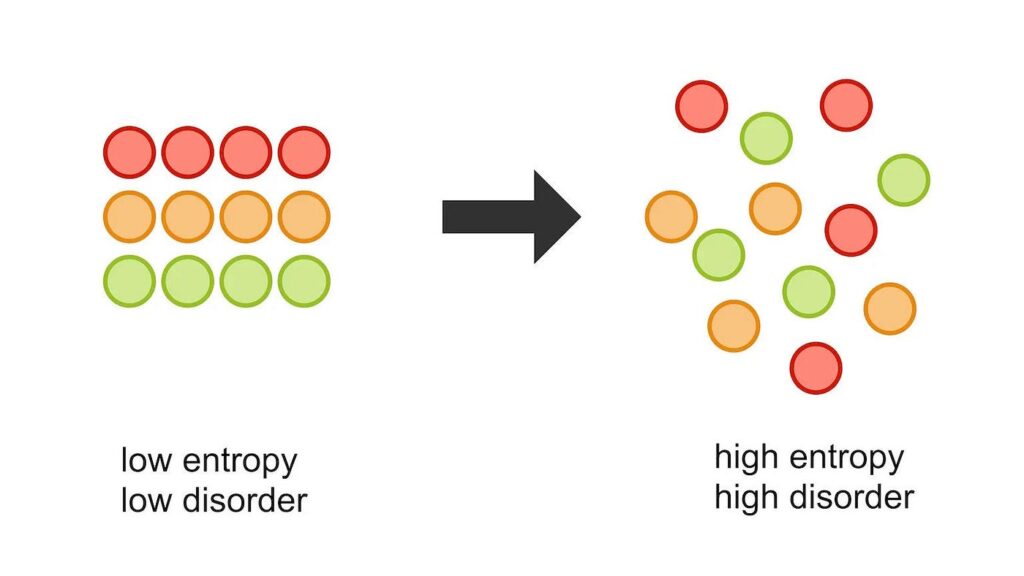
Just as in the MMORP games, life on Earth is supposed to be challenging, but leveling up requires that we love one another and recognize our connections with each other. Why? We are more successful at decreasing entropy with cooperation and love than we are with competition and warfare. 

I’ve introduced another physics term, entropy, which I’d like to describe in terms of the Second Law of Thermodynamics. This law states that the entropy (the inability of heat to perform work; disorder; randomness) of the entire universe, as an isolated system, will always increase over time. The second law also states that the changes in the entropy in the universe can never be negative. Essentially, physicists think that all the matter and energy in our universe will achieve a state of equilibrium, and nothing will perform “work,” bringing on the heat death of existence. It’s cause and effect. For instance, if I drop a glass on the floor and it breaks, I cannot reverse that because the arrow of time goes in the direction of entropy.

If we, instead, live in a simulated environment created by an intelligence that seeks increasingly complex experiences (as we do when we play video games), it would create a framework where these experiences can exist, and the avatars then have a playground while also decreasing entropy.

Another interesting thing that the simulation hypothesis has going for it is the Anthropic Principle. There are certain constants, such as gravity and the expansion rate, that are so precise that deviating from them in either direction would have prevented planets from forming. Though the universe outside the comfort of Earth seems very dangerous to life, these constants allow humans to observe the universe, which may be the point.

The takeaways here are very positive. We chose to be here under certain general circumstances. We have a series of goals to achieve, but we are meant to achieve the larger goal of love and cooperation together. We aren’t suffering the vagaries of outrageous fortune, but the consequences of each of our choices on or by the others in our lives. Essentially, we aren’t failing or succeeding in life when we make a choice; we’re gaining valuable experience with each one.

Valentine’s Day for the Mourners

If you’re fortunate enough to have a person to spend your life with or are in the bud of a new relationship, Happy Valentine’s Day to you. I am in a long-term relationship, but my spouse is away for the weekend celebrating the marriage of his oldest son. I have spent Valentine’s Day alone before, and it’s more of a Hallmark holiday than a legitimate day of celebration, so it doesn’t bother me. However, this day can make the lonely, and the mourners feel their emotional pain more keenly. We want an emotional connection to others, especially those we’ve lost to the death of the body.

I am now working at a Cancer center where people get treatment for their illness. I am also a cancer survivor, though mine was never going to be life-threatening. It still makes you consider your mortality, and it isn’t a cakewalk for your loved ones. My dad passed away before my stepmother, and that was unexpected because she was the one with the medical problems, and he was the vigorous outdoorsman with retirement to look forward to. When my gallows humor rears its ugly head, I will quip, “No one gets out of life alive,” which is true – this affects us all. By the time you’re middle age, you will see so many friends and family pass away that you begin to pull into yourself to avoid the pain of loss. My grandmother got to her mid-90s before dying but got so lonely from the loss of her husband and friends that her life was pretty miserable. She told us that making friends is a long process that you simply don’t have time for when you get to be her age. It’s a risky investment for an elderly heart.

The way we handle our relationships in our country is a real problem. We fear loss too much when we ought to be celebrating connection, no matter how brief it may be. As a lifelong afterlife philosopher, my study of parapsychology has shown me that we aren’t separated, not even by death. We are all of us connected in the most fundamental of ways. Death is nothing more than a transformation, a transmutation, and a metamorphosis. We don’t even have to go without communicating with our discarnate loved ones. 

Today, I imagined being in a support group with people who are emotionally wrecked by the loss of a spouse through bodily death. In my mind, I saw an empty chair next to each mourner as I talked them through the process of connecting to their discarnate. I have them close their eyes and focus on one of their best days with their departed spouse. What were they wearing? How did they smell? Was their hair mussed up by wind or coifed for a night out? What did you talk about? What were you doing? Did you touch each other? How did that feel? Listen to the memory of their voice, feel the soft, tender touches, and imagine they are sitting next to you right now. With all the evidence of life after bodily death, it wouldn’t take much suspension of disbelief to have the loved one be right there, next to them, for Valentine’s Day, or any other day, because, though they are not corporeal, they are still real and very much still with us.

Is ESP (Psi) Vestigial?

All of us, in the United States at least, have been taught that life began in the oceans, starting from single-celled organisms and ending with more complex organisms living in an ecosystem. When the oceans receded to icebergs at the poles, creating more landmass, organisms began to crawl out of the water onto land. Plants, animals, and insects became more complex and specialized to adapt to their environments and social structures. However, one genus of organism decided to head back to the ocean. 

This knowledge came to me quite recently through the television show NOVA: When Whales Could Walk. It was not a popular idea when first hypothesized so much evidence had to be collected. There appears to be a fossil record in South America where the land-based whale skeleton had legs. Other fossil records elsewhere showed a mammal that spent more and more time in the water. The cousin of that creature is the hippopotamus and they have many physical simularities such as webbed hooves. The other evidence was from a dead pilot whale that had washed up on shore, a rare event. A whale expert worked with an evolutionary biologist to perform an autopsy on the small, unfortunate creature. What they found defied what would be expected of a sea-based organism. Some of you may be aware of the unique type of multi-chambered stomach that ungulates (cows) have because they must digest the part of the plant that humans call “fiber”. This pilot whale had that type of stomach, though it is not an herbivore. Another clue was a small bone near what would have been the whale’s hip but unattached to the skeleton, what the scientists said was a leg bone. There is also how whales and dolphins swim: they use their flukes in an up-and-down motion, mimicking walking rather than the side-to-side motion of fish.

As fascinating as this is, what does it have to do with ESP? Simple: we can find clues in the human and animal record about it. We have a fossil and a written record of our development from the common ape ancestor to where we are now. We can compare ourselves to the mammals closest to us (apes) and other animals we consider intelligent (e.g. whales, dolphins, elephants). We can discuss the animal communication questions with scientists and with tested animal communicators (the psychic ones, not the behaviorists). Animals use many forms of communication such as chemical scent and vocalizations. Woodpeckers will find a high-tension tower and use rapid pecking to communicate with other woodpeckers. Dogs pee on anything and everything to leave a message for other dogs. Birds, especially those living in very thick vegetation, have brightly colored plumage to communicate health and vitality to their females. Squirrels will climb into the trees and send out a warning to other squirrels that a predator is on the loose. 

However, no animal has the capacity for very specific meaning in their communication except for humans. We speak and write our information to one another using complex social, sentence structure, and vocabulary conveying nuanced meaning depending on inflexion. Then we developed methods for communicating across distances first with the written language, then through telegraph and telephone, now through Zoom and social media which is almost instantaneous though it may come from the other side of the globe. The potential need for telepathic communication may have gone the way of smoke signals because there was a better, more specific and easier way to communicate. 

I may be what is called a panpsychist which is a person that believes all of nature has some level of awareness or consciousness. I specifically think that all of creation has access to a field, force or some other natural aspect that I like to call the information field. Animals may communicate with one another using animal telepathy and it doesn’t require knowledge of the other’s specific language. There really is a dearth of scientific inquiry regarding animal psi but there is one scientist who has looked into it and who has proposed experiments to strengthen the claim. Dr. Rupert Sheldrake is a biologist from Cambridge University who has a theory called Morphic Resonance which I recommend you read about, or watch the videos on the website. He looked into dogs who know when their owners are coming home, and N’Kisi, an African Grey parrot who seemed to know what her human companion was thinking and could use human language to describe it. You may own a pet and they may be eerily able to read your mind.

We can also go to archeologists and anthropologists for the question about psychic ability amongst people who live without technology or who embrace the older or ancestral systems. A book called Anthropology and Psychic Research goes into some of these written accounts and a current anthropologist named Jack Hunter goes into the cultural, ritual processes involved with unexplained phenomena.

The last step is to test ourselves. What parapsychologists already know is that telepathy and clairvoyance are both quite subliminal, not in our faces, just a quiet voice. Our world has become attention-grabbing in so many ways, it’s hard just to hear someone speaking to us much less pick up on ESP. It has become so pervasive that parapsychologists use a technique called ganzfeld to remove exposure to outside stimuli. If you take time to quiet your mind through meditation and want to have these types of communications, you can see for yourself if ESP is part of human communication.

Lorna Byrne: Angel Author and Messenger

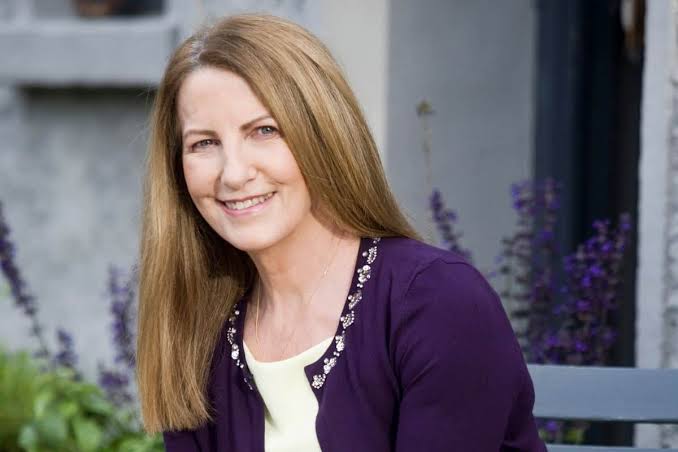
Lorna Byrne is an Irish author who has written “Angels Among Us,” which was published in 2008, became a New York Times bestseller, and was translated into more than 30 languages. Byrne’s other books include “The Light Within You,” “Angels in My Hair,” and “A Message of Hope from the Angels.”

Byrne was born in Ireland in 1953 to a financially struggling family. She claimed to see angels as a baby and grew up thinking that everyone could. However, Byrne is profoundly dyslexic and was unable to complete any formal education past primary school. It is through a miracle of technology along with the assistance of others that she could have four books published about her life with the angels. Her books have been such a success that she has appeared on numerous television shows and radio programs, and given lectures and workshops around the world traveling six to nine months of the year.

On Sunday, January 21, Byrne held a livestream event on YouTube discussing her experiences with Jeffrey Mishlove and Emmy Vadnais with questions from viewers. She talked about how angels have helped her in her life, and she shared her insights on how we can all connect with them. Of course, the inevitable questions about her sanity and veridicity were asked. As for her sanity, she was evaluated before a major surgery and found to be as sane as the rest of us. In her books, she offers numerous examples of precognition and clairvoyance that are given to her by her guides and she has offered to be tested by parapsychologists who are curious about them.

After reviewing the literature, I have concluded that we are not alone in the universe and that our neighbors find it difficult to communicate with us on this plane. Although I posted a question “Have the angels you’ve seen ever said or hinted that they may be another type of entity?” there was no time for her to answer it. However, Byrne does say that all other cultures and religions have their types of angels and call them by their cultural names. She does not state that the angels are only there for Catholic believers. That being said, her visitors have identified themselves by name, and they are a part of the angelic pantheon from the Christian Bible.

Reading Byrne’s books and listening to her interviews, you can see the rules by which the angels work. They do not interfere with human free will. The guardians assist their charges, healing angels help the ill, and “unemployed” angels do whatever task is requested, but only when specifically asked. One might venture that prayer is the request that galvanizes angelic assistance. When asked if humans become angels, Byrne states that angels serve humans and love us unconditionally. We are destined to be and are greater than these beings.

Putting together Byrne’s angels with that of spiritual medium contacts and close encounters of the fourth kind experiencers, there may be a plethora of entities willing to wear any facade that helps us feel comfortable with them. One need only read the rich historical myths as examples of how the “gods” appeared to humans to see how entities may have always been among us.

And So It Begins….

You would think that finally getting a book edited, re-written, re-edited, designed, and uploaded for epub platforms would feel like “Well done, mate,” but it’s just the beginning. 

I still remember vividly walking into the Rhine during the Wednesday weekly research meeting and being met with cordial greetings. I was so excited to get started on my psychometry thriller. The very first chapter was already written:

A woman is working late in an office. She rubs her palms nervously along her skirt as she waits for the jump drive to finish uploading a file. The room is dark, with just a few lights on here or there making every corner a possible hiding place for something sinister. As the progress bar reaches one hundred percent, she grasps the jump drive and quickly shuts down the computer she isn’t supposed to have access to. The drive goes into a zippered pouch in her purse as she gets up to leave, feeling a bit less nervous. She wasn’t noticed, it’ll be fine. Echoes of her heels clicking on the polished wooden floors sound like little gunshots. She stops to remove her shoes and continues to the elevator in bare feet. If only she could stop the sound from her rapid heartbeats which seemed, to her, a dead giveaway to her position. She presses the down button, then, again and again, it is taking too long. Was that movement over there? The air conditioner whooshes to life and she jumps at the sound before recognizing it’s benign. The interminable elevator dings its arrival slowly opening its doors in mockery of her desire to be gone. She glances into the car for any other travelers, then enters pushing the lobby button several times to make sure the elevator is aware of her impatience. 

The doors open upon a darkened corridor, wide with shuttered shops and cafes along either side. She glances first down one side and then the other, listening for any movement, footfall, or breath. Satisfied that she is alone, the woman heads to the exit down the corridor to the right. Her walk is more brisk than usual and she fails to mask the sound of her movements. Just this right turn and then the door out of here, she thinks, breaking into a quicker gait. She rounds the corner, in sight of the glass exit doors, when a hand grasps her purse, forcing her to twirl in place. All she sees is a flash of metal, and then wetness oozes down her front. The assailant pulls the purse from her grasp and leaves her to hold her throat together with both her hands as she tries to bring air into her blood-filled trachea. She collapses to the floor. The last thing her ears perceive is the rapidly receding click, click of the murderer’s shoes, and the bang of the exit door. The last thing she sees as her vision tunnels is her outstretched arm with the charm bracelet that means so much to her.  

“Not again!” Violette said, who was grasping the charm bracelet in her left hand. 

That was a pretty good first chapter in my humble opinion, but now I had to learn more about psychometry and how psychics and law enforcement worked together to solve crimes. It wasn’t long after that Sally Rhine Feather said “Elizabeth, once you finish that novel, could you work on one for young people?” And Calliope O’Callahan was born. However, after every meeting I attended, every book and research paper I read, and every talk I listened to, I realized how deeply rich the world of parapsychology is. Like a kid in a candy store, I wanted Callie to have all the abilities known to science, but that isn’t realistic. I was also more interested in the experiences and the effects than in the characters I created. My first completed draft went to a content editor. She looked at the story and found the characters flat and the middle to be quite boring. After I pulled myself off the floor, I learned more about the craft of writing, especially what makes a character’s journey compelling. The next three years were spent on this journey until I felt I had a draft worth sending out to a few interested readers. Their notes were encouraging so off to the second editor it went. 

The next fun part was publishing. I listened to numerous authors and other members of the publishing world compare and contrast self-publishing with traditional publishing. The last few years with Amazon as King Kong has thrown traditional publishing into a tizzy. I won’t bore you with details, but it’s why I went the self-publishing route. Self-publishing is like opening your own business, so I have to absorb the costs and responsibilities of my copyright (book). I am fortunate to have a freshly graduated mass media major helping me with social media, but I enjoy teaching, so I’ll be going to events when that is possible, and I will add those to my website. 

After this six-year trek, I’m a published author, member of several parapsychology organizations, copy-editor for New Thinking Allowed publications and for the Journal of Parapsychology and newly minted member of the board for the Rhine. With these bona fides, I attended a local fan convention called ConGregate 9 in Winston-Salem to speak about parapsychology. Fans love paranormal subjects but have little if any awareness of what parapsychologists study, or that any of these experiences are real. It wasn’t attended by a large number of people, and as an unknown, I didn’t get top billing for my panels, but a con runner needs to think about what the fans want and I needed to keep my mind on the primary goal: get the subject of parapsychology out to a new group of people. It went well, and there was awe, support, curiosity, and vindication, which was very cool. I hope you can attend one of these fan conventions one day, or perhaps a library talk is more your speed, either way, it would be great to meet you to discuss more about your journey into parapsychology.

Could Dark Matter be the Stuff of the Other Side?

I have been listening to the Yale philosopher Christopher Noёl on the New Thinking Allowed YouTube channel and have had my mind blown away. With all the years of research I’ve been doing, I had pretty much ignored where our souls/spirit selves go when leaving this mortal realm. It’s kinda over there in the corner somewhere and then in another dimension, perhaps. Or, it’s a pocket universe that makes it hard for people of that realm to communicate with us, or we’re simply downloaded into an information field. 

Rather, I have become more excited about the latest Journal of Parapsychology paper about how parapsychologists could create an overarching theory of psi as those early biologists did the theory of evolution (“Toward a “Parapsychological Synthesis”: Proposals for Integrating Theories of Psi” by Michael Nahm). It goes into detail about the sundry and various hypotheses that were finally wrangled into a cohesive and coherent theory that could be accepted by science at large. When parapsychology as a science does this with the theory of psi, it will be one step closer to an accepted scientific endeavor. What Christopher Noël says about dark matter might be another option.

When I saw Christopher Noël’s interview on his most current book There Is No Veil: At Play in the Vast Here and Now, I was intrigued. He is a philosopher, which means he looks at life from unusual perspectives, pushing us out of the boundaries of our current modes of thought. I am an autodidact philosopher and can respect that trait in others even if it can be frustrating for the paradigm-thinkers. He begins with a story almost typical in American teenage society pre-social media: with an Ouija board. I cringe inwardly at this because it isn’t a particularly safe tool to use. It’s akin to leaving the front door of your house wide open after having sent invitations to strangers to come on in. Of course, that’s what happened to young Christopher and his companions, a low spirit who felt too guilty to move on to the next realm came into the house for a little tête-a-tête. They were lucky that this weighty soul had no ill intent toward them, he simply needed them to get married and have a girl child to replace the daughter he’d killed. You can’t make this stuff up guys. Of course, Christopher didn’t marry his friend and have the child, which frustrated the dead guy no end, but it did open up a mental door in Christopher’s mind. He, like I, did not have a cultural impediment preventing him from contemplating what this visitation meant. 

Later, he read Vera Rubin’s hypothesis about why galaxies behave as they do, that the speed of the outer solar systems within those galaxies was the same as those closer to the galactic center. This shouldn’t happen unless there is invisible matter using gravity to move them along to the tune of ten times more invisible matter than visible. What did this mean to Christopher Noël? That we’re swimming in dark matter, it’s all around us and more pervasive than the matter we can perceive. Imagine going down to the bottom of a deep ocean trench with movie director/producer James Cameron and you photograph a fish. That fish has spent its entire life miles below the surface in pitch-dark, cold, high-pressure seawater. That fish never goes to the surface and only knows this environment. To us, it appears to be the harshest and loneliest place on earth, but this creature knows no different. Not to mention, this fish does not perceive James Cameron in his high-tech bathysphere as he tries to get its attention for a photo op.

Christopher takes a leap of logic and hypothesizes that this dark matter may be the stuff of our next life evolution. Let me take you along the trajectory of that leap so you might understand better what he’s thinking. Dark matter and dark energy are not visible to us nor to our measuring devices. We can only see their effects on the matter in the universe. This is akin to circumstances before the invention of the microscope where instead of bacteria, viruses, and fungi causing disease, something called “bad humors” was the culprit and leeches were the cure. We can frequently see effects before we understand the cause in science which pushes us to make better devices for perception and measurement. Now, through the use of microscopes, we know that it’s single-celled organisms causing us so much trouble. 

Why is dark matter currently impossible to perceive even with our advanced telescopes and spectrophotometers? It may be that it exists at a different frequency than our visible matter does. It may be less dense with its atoms having more space between nucleus and electrons. Perhaps the only perception device able to handle the presence of dark matter is the human brain. Every once in a while, something made of dark matter may be able to consciously lower its frequency to our level of visible matter and voila: ghost.

At the end of the nineteenth and beginning of the twentieth century, a number of physical mediums were given credit for creating a mysterious substance that was later called ectoplasm. Noises, shapes, the sudden appearance of objects (apports), movements, all of these things were attributed to the medium. Perhaps the truth is that the spirits could condense their atoms, attune their frequencies to match our own, and create matter from what appeared to be thin air. They could manipulate our matter from their realm to make things happen for us to perceive. It may explain, Christopher states, why it tends to feel cold around ghost events because of the rapid deflation necessary for the ghost to manipulate our environment (e.g. dry ice or liquid nitrogen) or apported items feel hot to the touch when they first appear (rapid increase in density).

I had the pleasure to listen to Laura Lynn Jackson who has a cameo appearance in my first book (under a different name). She is one seriously talented psychic medium who has the infectious joy of a saint. When asked where the other side might be, she said, “It’s right here” pointing directly in front of her. She told us that our spirit guides and soul family are present all around us all the time. They are trying to make contact with us but it’s difficult because we’re not paying attention. She said that they find it easier to manipulate things that have energy flowing through them or are affected by electromagnetism. They may cause lights to flicker or they may change the T.V. channel while you’re watching a show. All of those little glitches we tend to put down to mechanical failure. It sure does sound like something an entity from a higher frequency realm might do to get our attention.

Christopher mentions that Fredrick Meyers, founder of the Society for Psychical Research (1882), visited famous medium Geraldine Cummins thirty years after his death. He described his new home to her: 

It is a structure so fine, it is invisible to the mortal eye and the finest  instruments of the scientists. Ether is a bad term, but I cannot find another word to define it. This is a kind of air or as I would like to say, a fluid or an emanation. It is the ancestor of matter as we know it.

Noël states further that the etheric body that inhabits our physical body may be why we have evidence of out-of-body and near-death experiences. The etheric body just goes on a walkabout and then reinhabits the corporeal body once more. It could also be why psychokinesis works. People may have the ability to manipulate the dark matter/visible matter ratio within an object to make it move the way they want (e.g. table levitation). Or spirit knocks which are measurably different from rapping on an object with a knuckle or tool. They have a noise spike like pressure has built up in an object and then is suddenly released.

This is where my mind went blewy. I’ve been spending time considering that our matter was being controlled by a complex set of software, that or we’re living in a holographic universe as avatars. His hypothesis never even computed before, but makes so much sense. Not only that, but it means that with the advent of better measuring and perception devices, we humans might be able to bridge the gap between our perceived universe and that of the spirits.

Animal Psi- The N’kisi Project

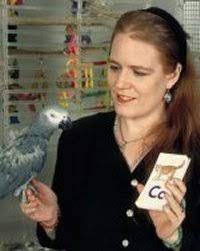
Aimee and N’Kisi the parrot

https://www.sheldrake.org/research/animal-powers/the-nkisi-project

I attended a Rhine science meeting where the scientists were debating the study that Rupert Sheldrake did with a remarkable African Grey parrot named N’kisi. I read this study years ago because my husband and I had an African Grey parrot named Nicodemus for thirty years. There are several AGs in captivity that have developed a really good vocabulary and have been tested using their acquired ability to tell us about their intelligence. However, in this instance, Dr. Sheldrake is testing N’kisi’s psychic ability.

It was 2003 when N’kisi’s human “Aimée Morgana noticed that her language-using African Grey parrot, N’kisi, often responded to her thoughts and intentions in a seemingly telepathic manner.” She had heard of Dr. Sheldrake’s previous work regarding dogs that knew when their humans were coming home and decided to get in touch. For the experiment, they put N’kisi into another room where the parrot would be unable to have any input from Aimée at all. N’kisi may or may not have been told what was going on, but that wasn’t in the paper. So, the parrot spent time just vocalizing and saying random words which is what happy parrots do. Aimée was asked to take photos out of envelopes and look at them for a period of two minutes each for a total of 149 trials. The researchers working with Dr. Sheldrake and Aimée decided on a set of keywords based on N’kisi’s vocabulary that matched the pictures Aimée looked at.

They used a videotape of the parrot and had three different people interpret what N’kisi said while they were conducting the experiment. Aimée wrote down when the two-minute window occurred so they could narrow down the time frame on the videotape.

Parrots can be notoriously difficult to understand for people who aren’t their humans very much like two-year-old kids are, so the interpreters may not have been able to understand N’kisi very well. This narrowed down the trials from 149 to 71 where the parrot uttered the keywords clearly. In twenty-three of those, N’kisi said one or two keywords associated with the pictures Aimée was looking at at the time. 

Now it’s time to look at N’kisi’s results based on a possible set of random answers. If N’kisi was just to say words at random while Aimée was looking at pictures, the parrot should have only got about 12 by accident. Statistically, it’s significant that the parrot got almost twice that. Where skeptics frequently have a problem is this interpretation of the statistics so this study wasn’t well received.

However, based on the stories told by average people everywhere, whether or not their animals can speak human, is that they appear to know more than they should. Now, we know that dogs have a really good sense of smell, and that’s arguably why they can sense the changes in their human’s smell that might mean a diabetic event or seizure, but how do they know it’s going to be a medical emergency? If I were a dog, I would notice my human’s scent is different and then go back to my nap rather than dial 911 with my paw.

Look up “animal communicators”, “pet psychics”, or “animal intuitive” and you’ll find quite a few people specialize in psychic bonds with creatures. Try to look up studies done with animal communicators and you’ll be pretty disappointed. I was able to find some researchers who studied animal psi, but not much about human/animal psychic links. Once, years ago, I stumbled upon a poorly designed horse communicator experiment where the horses had a medical problem and “told” the psychic who then had that confirmed by a veterinarian. I think there was also one done with a dog whisperer who could diagnose pets before their veterinarian visit. But look at the number of happy customers these intuitives have. Something about the human/animal relationship changes when an intuitive becomes their counselor. I don’t have the data on how many of these meetings fail compared to the successes so I cannot speak to anything beyond the anecdotal. 

What’s important here is that we need to expand past our anthropocentric views of the world. Animals appear to be much more than the sum of their chromosomes and the instincts that scientists claim drive them. We need to take seriously that there is something far more basic than speech involved in communication, so basic that animals can grasp it and are able to communicate across species.

J.B. and Louisa Rhine

J.B. and Louisa Rhine

Curious people become scientists. Some people find their original path of inquiry will make a giant curve toward an unexpected journey simply because they had one experience. Dr. Julie Beischel had intended to become one of a plethora of biochemists looking at potential new drugs but an incident with a spiritual medium derailed that idea. She and her husband now run the Windbridge Institute in California where they study mediums’ abilities.

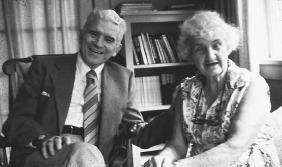
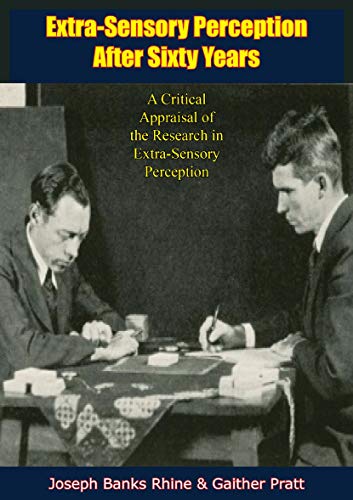
J.B. Rhine and his wife Louisa were botanists having both received their degrees at the University of Chicago when they attended a lecture by the author Arthur Conan Doyle. Not only did Doyle write the wildly popular stories about Sherlock Holmes, but he was also an avid believer in the afterlife and the abilities of spiritual mediums to have access to those who had passed on. At that time, in 1922, the Society for Psychical Research studied spiritual and physical mediums, but not using lab-oriented, blinded, and reproducible experimentation. Botanists of the early twentieth century utilized the most robust statistical methods of the time and Rhines decided to apply these to study supernatural abilities. 

Since the SPR was a relatively new organization and focused mainly in the United Kingdom, it was difficult for J.B. Rhine to find an academic position studying anomalous abilities in the United States. He continued to teach botany and Louisa to teach Latin until, when they had nearly given up hope, J.B. found a home in the newly formed Psychology department at Duke University with like-minded chairman William McDougall — a past president of both the American and British SPR. By 1935, Rhine presided over the Parapsychology Laboratory and worked tirelessly to create rigorous experiments to show the statistical existence of extrasensory perception, a term he made famous in his book “Extrasensory Perception” published in 1934.

Along with developing experiments with her husband, Louisa Rhine became the unofficial curator of the numerous letters sent to the Rhine after J.B.’s bestseller gave those who had experienced anomalous events hope that they were not alone. She published several books about the anecdotal events explained in the thousands of correspondence they received. By 1980, Louisa became president of the SPR, the same year J.B. passed away.

The Rhine Research Center is the oldest parapsychology laboratory in the United States and the Rhines’ methodologies and experiments have been utilized and replicated in labs around the world. It holds the Alex Tanous library filled with hundreds of books on the various subjects parapsychology encompasses. Though it has not been associated with Duke University for many decades, it is located near the campus and attracts many academics from the University.

Sally Rhine Feather

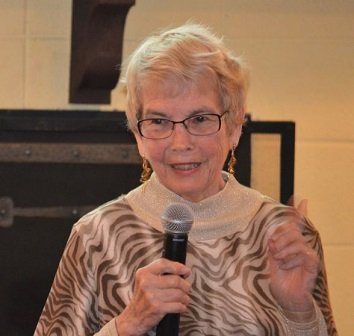
I have had the distinct pleasure to have met and befriended their daughter, Sally Rhine Feather who, in her nineties, is still very active at the Center and who inspired me to write the Calliope O’Callahan novels. The Psy Syndicate is an amalgam of several parapsychology research centers like the Rhine, but I consider the Rhine my classroom filled with very smart, lovely people. 

Jeffrey Mishlove and “New Thinking Allowed”

My history with parapsychology began when I walked into a weekly research meeting at the Rhine Research facility just off the Duke University campus (please see my post about J.B. and Louisa Rhine). A group of mostly retired psychologists was discussing the most recent article in the Journal of Parapsychology as I sat down at the table. I was unemployed and working as a volunteer at the local museum so I was wearing the volunteer T-shirt at the time. I told the group that I was not a researcher, nor was I interested in being one, and that I wanted to write accurately about parapsychology. Thus began my journey into the deep and vast ocean of books, research papers, and websites involved with the subject. 

I spent as much time as I could in the Alex Tanous library reading from the hundreds of books it has, I took courses and participated in research studies, but I still wanted to learn more. Of course, I surfed the net and landed on the “New Thinking Allowed” YouTube channel where hundreds of videos on subjects ranging from aliens to meditation can be found. I tried to stick to videos on telepathy, dowsing, remote viewing, and mediumship, but the other titles tantalized me enough to delve further into related subjects.

Jeffrey Mishlove is the current host of the channel and he’s been the public face of parapsychology since his original public television show “Thinking Allowed” began in 1986. He migrated to YouTube with the “New Thinking Allowed” in 2015 where he has posted both taped interviews and live stream events several times a week. 

Dr. Mishlove is the only parapsychologist to have received his Ph.D. from an accredited American University migrating from an anomalous psychology interest that had him working with people incarcerated in prison. He wrote two books “The Roots of Consciousness” which was his doctoral dissertation and “The PK Man” about Ted Owens, a talented psychokinetic whom Jeffrey researched. He won the Bigelow Institute essay contest in 2021 with his piece “Beyond the Brain” about survival after bodily death which brings many concepts together into a “bundle of sticks” creating strong evidence for life after death. He is not your run-of-the-mill researcher, rather he is a most knowledgeable and patient interviewer who brings out the most in his guests.

I applied to the New Thinking Allowed foundation to be a volunteer beginning with editing the closed captions on the YouTube channel. Since I suffer from hearing loss and tinnitus, I find accurate subtitling to be important for those in the hearing-impaired community and worked on many videos along with a team of four others. Jeffrey put out a request for editors to work on a book he wants to publish (and hopefully will be) called “Psychic Liberation”, a compilation of a few dozen YouTube transcripts. We worked on this for over two years meeting once every few weeks with Jeffrey to discuss our progress and assignments. I got a chance to look at the first draft of “Beyond the Brain” and found the arguments compelling as did the judges from the Bigelow Institute. I recommend that you go through this multi-media essay for one of the most definitive and thorough arguments for the survival of consciousness that I’ve ever seen. 

Amongst his many distinctions, Jeffrey also managed to win a libel case against The Amazing Randi who had made claims in the Journal of Psychology that Jeffrey did not have a degree in parapsychology and that, if he did, he was obviously incompetent. Had he not won that court case, he would not have been inducted into the various scientific associations that have benefitted from his membership.
Although I have great respect for Jeffrey, you will not see a character based on him in my novels (yet). That being said, if you want to watch some really cool, mind-bendingly informative videos about the esoteric, sign up for the weekly newsletter at NewThinkingAllowed.org.

The New Thinking Allowed Foundation has just released its maiden periodical called “New Thinking Allowed” magazine for Spring 2023. You can find it here. For future releases and interviews, join the New Thinking Allowed newsletter.